 1 / 3
Changi Chapel & Museum
📍 Changi, East
Is this your venue? Claim this listing →
Changi Chapel and Museum explores the experiences of prisoners of war and civilian internees during Singapore's Japanese Occupation. Families can discover personal stories, wartime artefacts and a reconstructed chapel.
🏆 Family Action Verdict
Changi Chapel and Museum offers a meaningful educational experience for families interested in Singapore's history and the human stories behind the Second World War. Rather than concentrating on military equipment or battlefield displays, the museum focuses on the everyday experiences of people living through captivity.
The personal belongings, reconstructed chapel and accounts of resilience help make historical events more understandable, particularly for older children studying the Japanese Occupation or learning about the war for the first time.
Parents should be aware that the subject matter includes imprisonment, suffering and wartime hardship. Some exhibits may be upsetting or difficult for younger children to understand. This is a quiet, reflective museum rather than an interactive play attraction, and families may wish to discuss the historical context before visiting.
For school-aged children and teenagers, Changi Chapel and Museum provides an opportunity to connect classroom history with real experiences, encouraging conversations about courage, compassion and remembrance.
ℹ️ What to Know Before You Go
💬 What Families Are Saying
View all reviews →627 Google reviews
G Reviews from Google
Sachertorte Tartetatin
9 months ago
“I think people who visit Singapore should go there. There are a lot of tourist spots which are very fun in Singapore. However, it's important to learn about war. By the way, it's a little hard to go there. I had to take two buses, and it took about 45 minutes from chabgi airport.”
C P
9 months ago
“Don't bother with the free guided tour. I can't see what it would have given me extra than to that which I observed myself. Bright and airy, sombre and informative. Staff I encountered were fine. Good restaurant attached.”
Christine Bennett
a year ago
“Small museum and chapel in quiet suburbia near the airport. We traveled by train and bus from Little India. A bus stop is conveniently located in front of museum. We booked in advance online a tour guide (a must). The tour went for an hour and our tour guide Karen was very professional and engaging throughout our time with her. The museum is laid out very well and has a lot of information and displays to see. Very educational information to read and watch. A sobering morning learning about the conditions of the POWs and civilians incarcerated during this time. Our guide also spoke about the prisoners order to leave Changi to go to work on the Burma Railway. There isn’t much to see outside of the museum - a few sign boards. There is a cafe on site (next to museum), serving lunch and also beers.”
📊 Commonly mentioned in Google reviews
Based on Google review tagsWwii history
55 reviews
Japanese occupation
16 reviews
Audio visual guide
11 reviews
Interactive exhibits
8 reviews
Robot guide
7 reviews
Overview
Located on Upper Changi Road North, Changi Chapel and Museum is a historical museum dedicated to the prisoners of war and civilians held in Changi during the Japanese Occupation of Singapore from 1942 to 1945. Through personal belongings, photographs, historical records and individual accounts, the museum explores daily life in captivity and the resilience of those who endured it.
The exhibition follows a chronological journey through eight themed sections, beginning with Changi's pre-war history and the fall of Singapore. Visitors learn about the conditions faced by prisoners and civilian internees, including the challenges of obtaining food, maintaining health and coping with separation from loved ones.
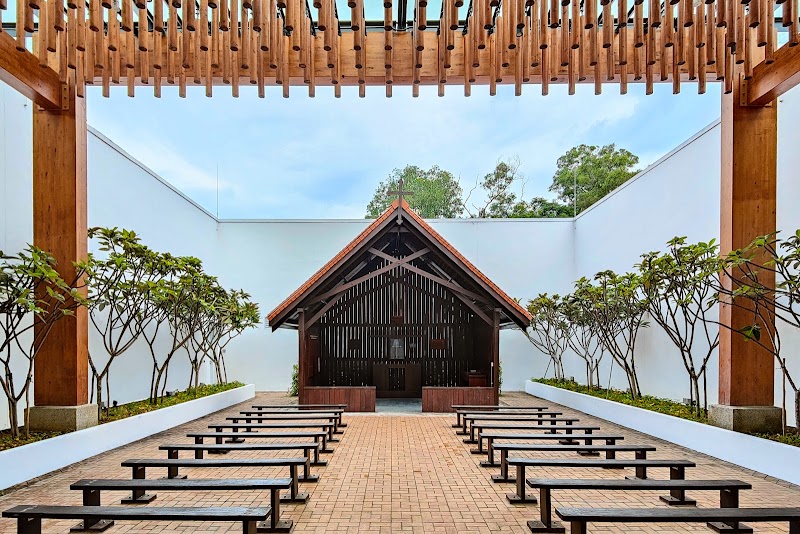
One of the museum's central features is a reconstructed chapel modelled after St George's Church, originally built by prisoners of war. The chapel represents the importance of faith, community and hope during captivity, providing a quiet space for reflection.
Other galleries highlight the resourcefulness of internees, including handmade objects, artwork and personal possessions that reveal how people adapted to difficult circumstances. The final sections explore liberation and the lasting impact of the war on survivors, their families and Singapore.
The museum also offers educational resources, public programmes and guided tours. Its combination of historical artefacts and personal storytelling makes it a place for families to explore an important chapter of Singapore's history together.